Below are descriptions of different kinds of research and resources I have used and continue to work with. Each section summarizes how I have applied specific research methods, tools, and/or resources to my projects and publications.
Sociolinguistic Surveys

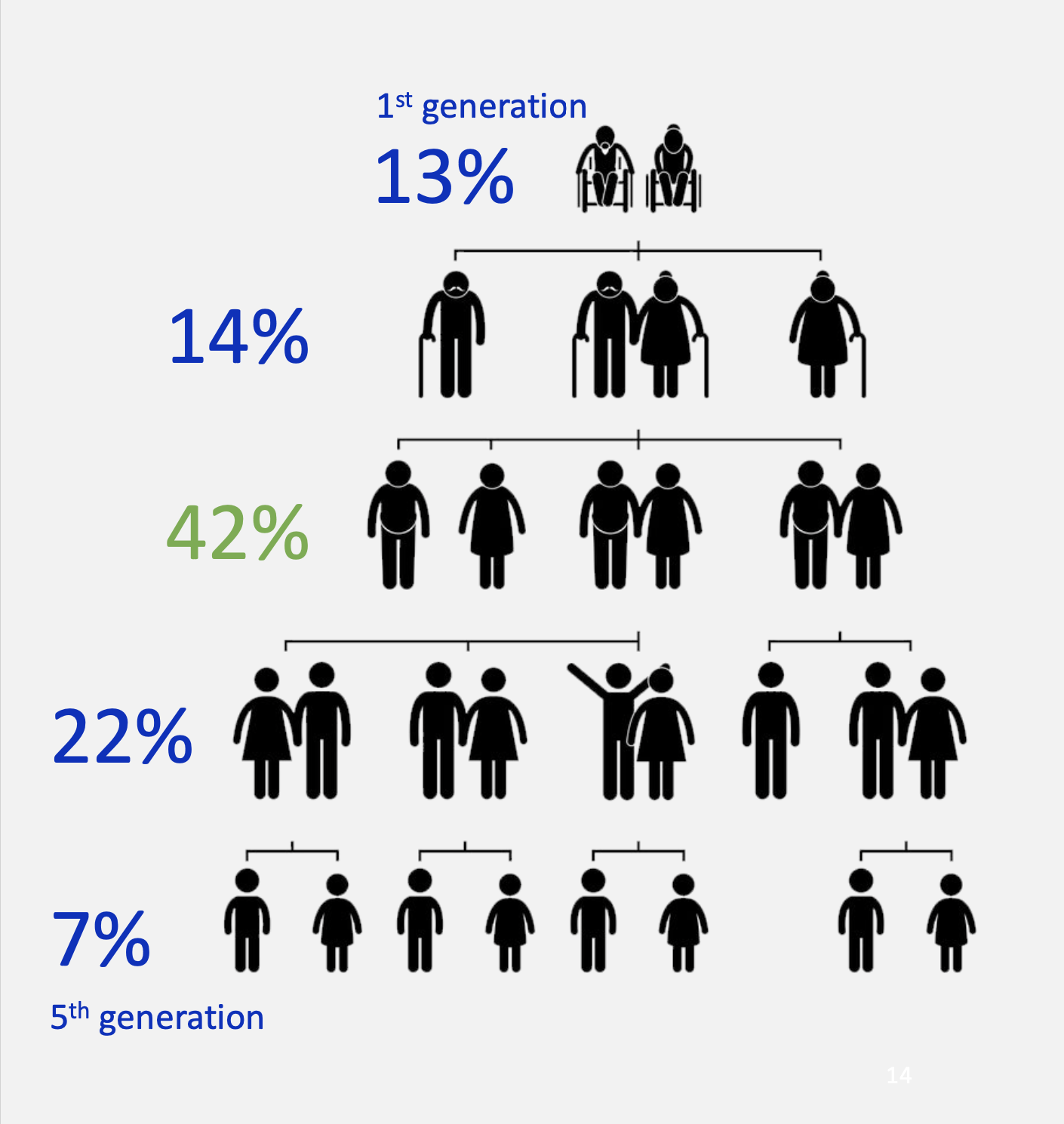
Sociolinguistic surveys are a helpful tool we can use to understand the complex and varying relationships individuals have with the languages they use, but also heritage languages they may not use day-to-day, but feel connected to in other ways. Feelings towards and experiences of heritage language can have interesting implications for the construction or maintenance of heritage identity, and can also reveal language attitudes and underlying languages ideologies. By using online surveys, it is possible to reach many participants who can complete the survey without time pressure and within an environment of their choosing. Sociolinguistic surveys do not adequately replace fieldwork interviews, but allow for broad collection of valuable quantitative and qualitative data.
“Language and Identity: The Case of North American Icelandic” was a sociolinguistic survey project conducted by me and Kirsten Wolf in 2020 that sought to understand how Icelandic heritage identity is informed by knowledge and/or experiences of the Icelandic language. If you would like to view (or download) the survey Kirsten Wolf and I developed for our project “Language and Identity: The Case of North American Icelandic,” click the orange button below and it will open the PDF version of the survey in a new tab.
I have developed a similar survey on language, culture, and heritage identity as part of my dissertation research, but this time with Norwegian-American participants and anyone else who feels connected to Norwegian heritage communities in North America. If you are interested in learning more about this study, click the orange button below and you will be taken to the study’s page contained within this website. Survey collection has ended for this project.
Sociolinguistic Metrics

In my dissertation, I build on Reed’s concept of rootedness (2016), or connectivity between concepts of self and place, as a useful sociolinguistic measure in the study of regional speech. For sociolinguistic work in heritage language communities, I suggest using an additional and complementary dimension of connectivity as a tool to be used together with rootedness called heritage-place dependency which measures the degree to which a person’s sense of heritage identity is tied to place – specifically, a place defined by its history of residence or settlement by the heritage group.
I created an adapted rootedness metric and developed a separate heritage-place dependency metric to be used as sociolinguistic variables in the analysis of two post-shift linguistic phenomena in Westby, Wisconsin – final stop aspiration and Norwegian’s continued symbolic value among English monolinguals. Using speaker scores on scales of rootedness and heritage place dependency, I tested for variation in the expression of final stop aspiration and symbolic value of the Norwegian language among English monolinguals, and I examined how the two scores interact with each other. My works also suggests using metrics for other dimensions of connectivity as sociolinguistic variables, including connectivity between self and heritage. How important someone’s heritage is to their identity or sense of self has implications for how they feel and think about the heritage language and, possibly, for variation in the ways that multiple linguistic systems are cognitively integrated.
Fieldwork Interviews


I have assisted with linguistic fieldwork carried out by other researchers with speakers of heritage Norwegian in western Wisconsin, and conducted my own fieldwork in the same region. I conducted sociolinguistic interviews in English with Norwegian-Americans who grew up in and around Westby, Wisconsin for my dissertation. Interviews consisted of three components: 1) perspectives on regional English, 2) perspectives on heritage language, culture and identity, and 3) an interactive photo description task. The goals of this fieldwork were to better understand post-shift relationships to heritage language and culture, collect examples of regional English speech, and demonstrate the range of linguistic attitudes in this geographic area.
Acoustic Analysis

My most recent sociophonetic work investigates the frequency of final stop aspiration (FSAsp) as well as realizations of fricatives (especially /s ~ z/) in historical and contemporary American Norwegian (AmNo) bilingual speech, and in the speech of contemporary English monolinguals in western Wisconsin. I have also used acoustic analysis in work on Norwegian accent tones and segment wide prosody in American Norwegian.
In using acoustic analysis to examine final stop aspiration, I found that a difference in the phonetic realization of final stops /p/, /t/ and /k/ in English and Norwegian, two phonologically similar languages, resulted in an example of phonetic transfer that has lasted through half a century of American Norwegian bilingualism and continued into the monolingual English of the same region to a degree that is markedly different than what is expected in American English.
Perceptual Dialectology & Perception Studies

I use perceptual dialectology (a mental map task) as the introductory component of the 3-part sociolinguistic interviews I conducted in western Wisconsin for my dissertation. I ask for elaboration and pose questions targeted at the participant’s own variety, and their awareness of its distinctness, as it compares or contrasts with other regions of Wisconsin and the greater Upper Midwest. I plan to incorporate perception studies at a later point to understand if individuals from outside of the community are able to identify differences, or establish speakers from western Wisconsin as a distinct linguistic group.
Speech Collections & Online Corpora
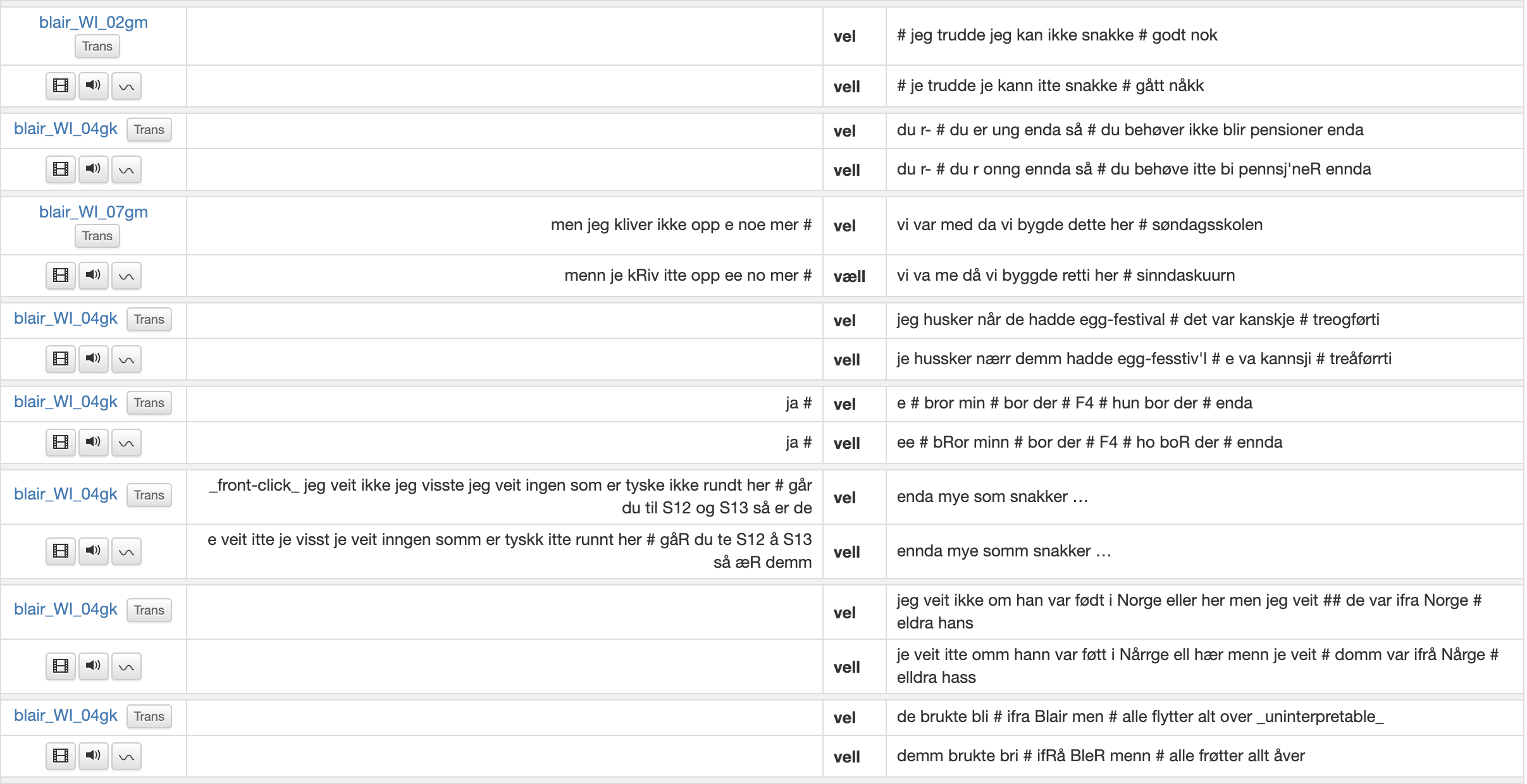
The University of Oslo’s Institute of Linguistics and Nordic Studies has a number of useful Norwegian language speech corpora available online that I have used in different projects. Joe Salmons and I used CANS extensively when examining bilingual usage of discourse markers, but were also able to use the other European Norwegian speech corpora hosted by UiO ILN to compare the American Norwegian speech to. CANS can also be consulted for sociolinguistic information thanks to the topics posed by interviewers to generate conversation: early life, life and society, language use, farm life, etc.
Linguistic Data in Newspapers
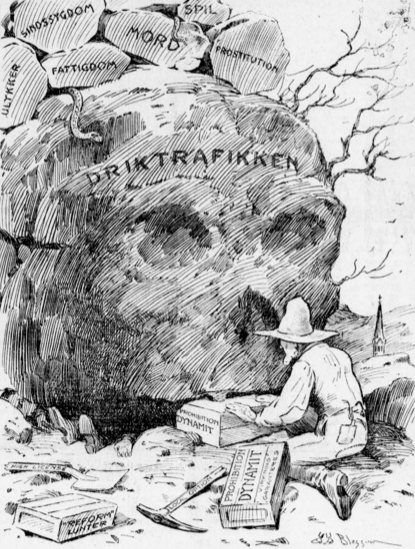

Newspapers, past and present, contain a wealth of sociolinguistic information; from linguistic standards and usage visible in the written text to metalinguistic indicators of language attitudes and ideologies. Norwegian and English language newspapers in America have informed my research on stereotypes, dialect comedians, language policies, language attitudes and ideologies, community history, language shift, sound change, and postvernacularity (symbolic connections to language in a post-shift setting).
 Laura Moquin